
Blog #09: Demolition Preparation

Updated: Jan 17, 2023
The process of demolition in our city typically begins with obtaining the necessary permits. This typically includes a demolition permit, as well as any other permits that may be required for the specific type of work being done (such as electrical, plumbing, rat or asbestos abatement). For us, the demotion preparation consisted of the following steps:
1. Disconnecting Utilities: Once the demolition permits were obtained, the first step was to disconnect utilities that were connected to the house, such as electricity, gas, and water. We contacted the utility company that took care of disconnecting utilities.
2. Tree Removal: Our property had 6 big trees that unfortunately had to be taken down. Tree removal typically begins with a tree assessment by a certified arborist, who will consider factors such as the health and size of the tree, its proximity to the house and other structures, and any potential hazards it may pose during the demolition process. Our demolition permit specifically included the trees that we had to cut down. According to the city guidelines, tree removal permits require replacement planting and our construction plan shows all the trees we are going to plant.


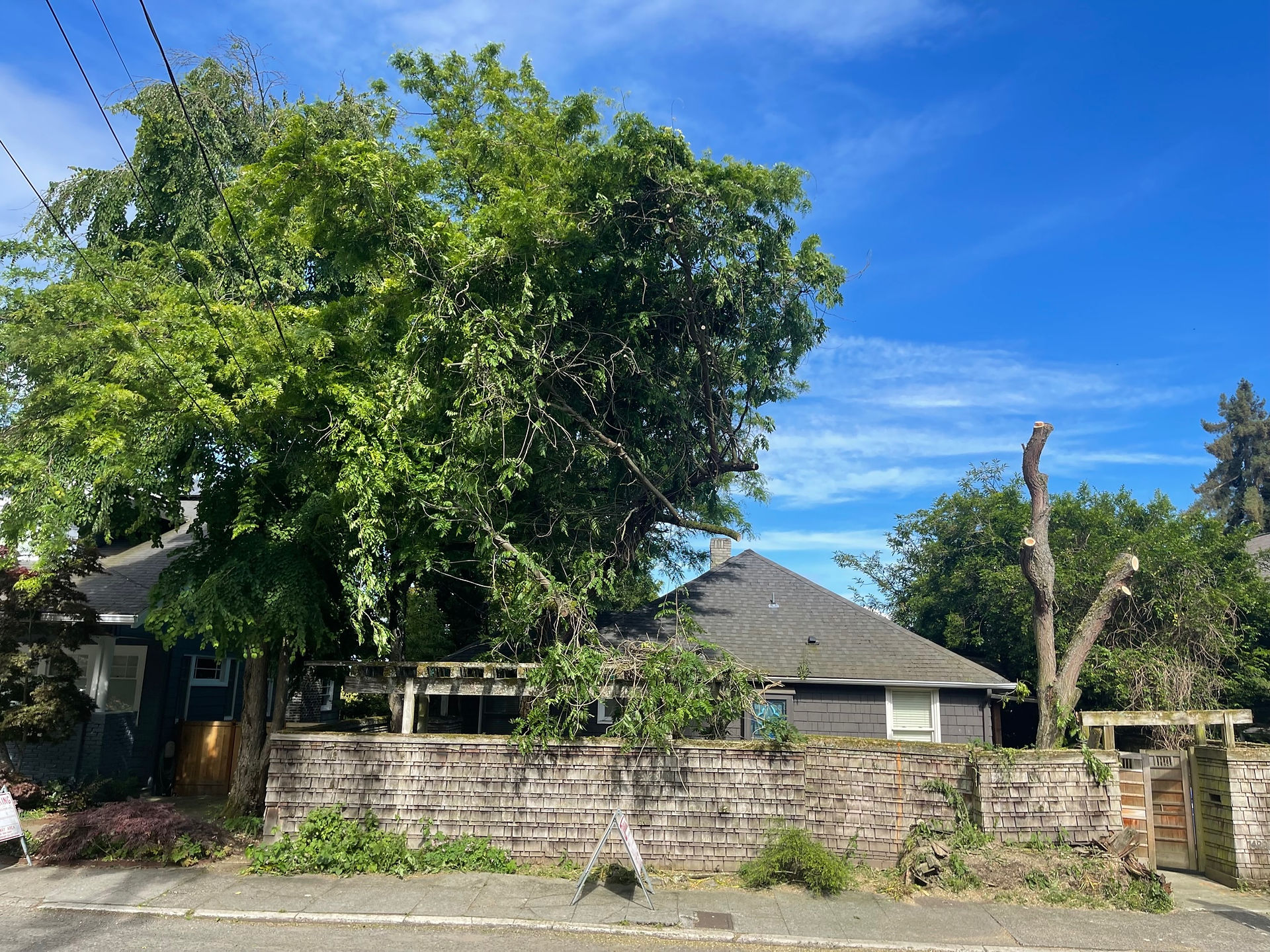

Removal required the use of specialized equipment, such as a crane and bucket truck, to safely remove the tree. Careful attention was paid to minimize the risk of injury to workers and bystanders.
3. Rat Abatement: During the demolition process of a house, rat abatement may be required depending on the condition of the house, the surrounding area and the likelihood of rat infestation. Rats and other pests may seek shelter in an abandoned or dilapidated house, and during the demolition process they can be disturbed and displaced, potentially leading to an increase in the rat population in the surrounding area. To prevent this, we contacted a pest control company to perform a rat abatement before the demolition begins. The company used traps, bait stations, and other measures to control the rat population on the property.
4. Asbestos Abatement: A trained and certified asbestos inspector conducted an inspection of the house to determine the presence and location of asbestos-containing materials and found that our chimney contained asbestos.

The asbestos abatement process typically involves sealing off the work area to prevent the spread of asbestos fibers, and then removing the asbestos-containing materials using specialized equipment and techniques. Workers wore protective gear, such as respirators and protective clothing, to minimize their exposure to asbestos fibers. After the asbestos-containing materials were removed, the work area was thoroughly cleaned using HEPA vacuums and other specialized equipment to remove any remaining asbestos fibers.
5. Donation to Habitat for Humanity: Donating windows and doors to Habitat for Humanity is a great way to repurpose materials from a demolition project and help support a worthy cause. Habitat for Humanity is a non-profit organization that works to build and improve homes for low-income families and individuals. They rely on donations from individuals and businesses to provide affordable housing. We contacted our local Habitat for Humanity affiliate and they came by and took away whatever they could.
Before demotion we submitted all the certificates to the city as a proof of the work done.

Comments